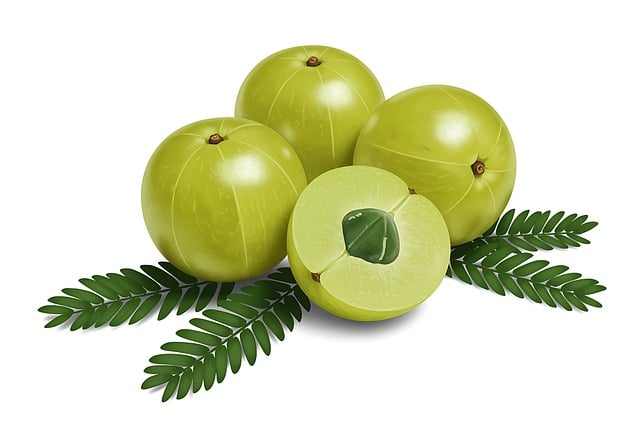
Indian Gooseberry, commonly known as amla, can be labeled as a super fruit due to its antioxidant property, anti-inflammatory, and metabolic-regulating effects. It grows natively in India and nearby countries. The fruits of the flowering tree are round and bright green in colour. The taste is a mix of sour,sweet, bitter, astringent and pungent. It has two scientific names Emblica officinalis and Phyllanthus emblica.
The Indian Gooseberries are exceptionally high in Vitamin C. 100g of fresh fruits (2-3 fruits) contains as much vitamin C of 20 oranges. The natural tannins available in the fruit stabilize the vitamin C, preventing it from degrading quickly. In addition to vitamin C, it is a good source of fiber and contains vitamins A, B1, and E, as well as minerals like calcium and iron, and is low in sugar.
Some of the available antioxidants in amla are emblicanin A and B, corilagin, geraniin, isocorilagin, pedunculagin, phyllanemblinins A-F, and punigluconin.
Indian Gooseberry has been studied extensively for its health benefits. Here are some health benefits based on the findings from evidence-based studies:
Good for Memory & brain health
The free radicals are formed during metabolic reactions in the body. They can attack and damage brain cells which might lead to neurodegenerative disorders and memory loss in the long term. The phytonutrients and antioxidants in Indian Gooseberry can benefit memory by fighting against those free radicals. Norepinephrine is a neurotransmitter that is important to improve brain function. High concentration of vitamin C in Indian Gooseberry supports your body to produce Norepinephrine.
Boosting Immunity - Due to the high Vitamin C content, Indian Gooseberry may have high immune strengthening effects. Its oxidative property can decrease cellular damage and inflammation which leads to optimizing immunity. In ayurveda, Indian Gooseberry juice is used to improve immunity in the body. It can increase the production of white blood cells.
Liver health - The extract of the Indian gooseberry, is known for its potential benefits for liver health, including detoxification and improvement of liver function. Studies have been done to find Indian Gooseberry juice & its impact on liver function parameters like Alanine Transaminase (ALT), Aspartate Transaminase (AST), Gamma Glutamyl Transferase (GGT) and Serum bilirubin. (1725505808-ISARJST-902024-GP.pdf)
The findings demonstrate that regular Indian Gooseberry juice consumption is associated with significant reduction in liver enzymes ALT & AST, improvement in serum bilirubin and beneficial effects on the lipid profiles. Studies also show Indian Gooseberry juice promotes the growth of new liver cells, which aids in the healing of injured tissue.
One study shows that 1000-2000mg of Amla extract can reduce LDL cholesterol by 10% to 20% in 8 to 12 weeks.
Indian Gooseberry juice might be used as a contemporary treatment for liver related conditions and enhance liver function. However, more scientific evidence is needed to determine the optimal dosages for various populations to use it as a treatment.
Digestive health - polyphenols present in Indian Gooseberry can protect the digestive organs. Helicobacter pylori is a microorganism which is known to cause gastric ulcers. One of the effects of bioactive compounds in Indian Gooseberry is the potential inhibition of Helicobacter pylori. The Indian Gooseberry extract is also found to reduce acid secretion and ulcers in animal studies. (Functional and Nutraceutical Significance of Amla (Phyllanthus emblica L.): A Review - PMC) Another benefit of Indian Gooseberry is reducing heartburn due to GERD (GastroEsophageal Reflux Disease). According to scientific evidence, the daily consumption of Indian Gooseberry extract (500 mg/tablet, twice a day) reduced the severity and frequency of regurgitation and heartburn in comparison to placebo group.
A study, Individuals with mild dyspepsia reported 40% improvement after taking 3g of Indian Gooseberry for four weeks.
The soluble and insoluble fibre in Indian Gooseberry supports healthy digestion and regularity by adding bulk to stools and facilitating bowel movements.
According to Ayurvedic medicine, amla can balance all three doshas and it has a cooling property. Many ayurvedic formulations contain amla because of its ability to Improve the body composition and nourishes the body. Amla can bring true resilience and enhance Ojas, the vital energy of the body.
Slow down aging - the fruit is full of Vitamin C which is a powerful antioxidant. Antioxidants fight against the free radicals, preventing cellular damage. May lead to slowing down the aging process. Vitamin C also helps in preventing the breakdown of collagen. Vitamin C in Indian Gooseberry may inhibit an enzyme that contributes to hair falling. In addition to vitamin C, amla contains a notable amount of vitamin A, which may help prevent age related macular degeneration and maintain good vision.
Controlling Diabetes - The high levels of soluble fiber, which dissolve quickly in the body, contribute to improved glycemic control by slowing down absorption of sugar. The high vitamin C content in Indian Gooseberry boosts insulin sensitivity and reduces oxidative stress, a key factor in diabetes complications.Enhancing insulin function by allowing cells to respond to insulin effectively is another benefit of vitamin C, polyphenols and tannins present in Indian Gooseberry juice. Antioxidant properties of Indian Gooseberry contribute to the protection of pancreatic beta cells from damage and inflammation, ensuring long term insulin production.
How to incorporate Indian Gooseberry into your daily diet.
Amla can be eaten raw, juiced, powdered, pickled, or fermented, ideally on an empty stomach in the morning for maximum health benefits. Supplements are made as powder, dried fruits or fruit extractions. However, the whole plant is used in indigenous medicine.
- Eat them raw either plain or sprinkle some salt and chili powder to enhance the flavor
- You can eat dried amla slices as a snack. When drying add a little bit of lemon juice and salt then mix with the amla slices.
- Eat amla fruits after boiling them in turmeric and salted water.
- Make pickle or chutney from amla fruits
- Drink amla fruit juice or amla powder mixed with water as herbal tea in empty stomach with added honey
Amla is generally considered safe for most people when consumed in moderate amounts. People with low blood sugar, diabetes who are taking medication (because it can enhance insulin sensitivity and glucose uptake), those who take blood thinning medication (amla has natural blood thinning properties), people with kidney disorders (consuming amla frequently or in large amounts might enhance the risk), pregnant and breastfeeding women (amla is generally safe and beneficial during pregnancy, excessive consumption might cause gastrointestinal discomfort and diarrhea), people with sensitive stomach and people with certain food allergies and sensitivities should consult with a healthcare professional before using amla powder supplements as the safety in these populations is not fully established.
In summary, incorporating amla into your daily routine can be a natural way to enhance liver health, support detoxification, and improve overall well-being. However, moderation is key, and it's important to consider individual health conditions when taking supplements or using it as a treatment.
Author - Yashodha Jayalath
MSc in Food Science & Technology, PGIA University of Peradeniya, Sri Lanka.
BSc in Health Promotion, Rajarata University of Sri Lanka.
Pg Dip in Psychological Counselling & Psychotherapy, Institute of Psychological Studies Sri Lanka.
Associate Member of Sri Lanka National Institute of Professional Counsellors, Registration number 2015/1526